

Species Care Guide
Poecilotheria ornata
Fringed ornamental tarantula
Also known as: fringed ornamental, Sri Lankan fringed ornamental
Last updated: June 25, 2026
Buy this species
Origin
Poecilotheria ornata, also known as the Fringed Ornamental or Sri Lankan Ornamental, is native to the lush, humid forests of central and southern Sri Lanka. These beauties can be found living high up in tree hollows, crevices, and under loose bark in their natural habitat. The climate there is warm and sticky, with high rainfall and temperatures that rarely dip too low. This blend of tropical rainforest and sporadic dry spells shapes their wild behaviour—never too far from their next meal, a hiding spot, or a chance to dart up a trunk when disturbed. In short, they’re fantastically adapted to arboreal life and love a bit of heat and humidity, much like most hobbyists after a holiday abroad.
Adult Size
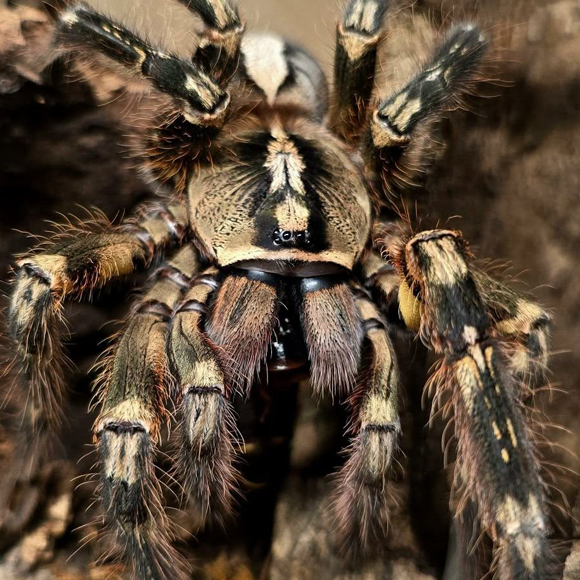
Poecilotheria ornata are true giants among arboreal spiders. Mature females can reach impressive diagonal leg spans of 20 to 22 cm, easily stretching across an adult’s forearm (but please leave them in the enclosure!). Males are generally smaller and leggier-looking, typically topping out around 16 to 18 cm. Both sexes are breathtaking, with intricate leaf-patterned markings and flashes of yellow under the legs—often seen as they bolt away with characteristic Poecilotheria flair. Rapid growers compared to many other species, they’ll give you plenty to look at long before they reach their full size.
Lifestyle
Firmly arboreal, Poecilotheria ornata is a classic tree-dweller. In the wild, they rarely touch the forest floor by choice, preferring vertical spaces where they can feel secure and observe the world from above. In captivity, they behave much the same way, frequently hugging the walls of their enclosure or clinging to cork bark. They’re lightning-fast and tend to make use of every inch of vertical space you can provide, often constructing intricate tube-webs behind hides and decor. They’ll surprise you with sudden bursts of speed up the glass if you catch them off guard, so always expect the unexpected when opening their home.
Lifespan
Females are the marathon runners in the tarantula world—given proper care, they can live 12 to 15 years in captivity, sometimes even longer! Males, however, live life in the fast lane: they mature quicker and usually pass away within 3 to 4 years after reaching adulthood (typically soon after their final moult). If you’re after a true long-term display, females are the way to go, but even males offer spectacular colours and activity during their short reign.
Growth Rate
Poecilotheria ornata are often applauded for their brisk growth, especially compared to many ‘new world’ tarantulas. Under the right conditions—warmth, regular meals, and a bit of humidity—spiderlings and juveniles can shed every 4 to 8 weeks. This means you’ll see dramatic growth in their first year or two. Factors that influence speed include feeding frequency, ambient temperature, and stress. Warmer temps and plenty of protein can encourage faster moults, but as always, slow and steady wins the longevity race.
Temperament
Ah, temperament—a topic that keeps keepers on their toes! Poecilotheria ornata is famed for its skittish and defensive nature, but truth be told, they’d much rather leg it than pick a fight. When disturbed, they’ll bolt, teleporting from A to B quicker than you can say ‘where’d it go?’ This is not a spider for the faint of heart or for anyone susceptible to ‘jumpy hands.’ Defensive postures happen if escape routes are blocked, and they pack a medically significant bite—so best to admire from a respectful distance. In short: beautiful, bold, but don’t take liberties and you’ll get along swimmingly.
Temperature
Aim to keep Poecilotheria ornata in the sweet spot between 22–27°C. They’re comfortable at ordinary room temperature but do appreciate a gentle nudge of warmth, especially in colder months. A well-positioned heat mat on the side (never underneath) can help maintain stable temperatures if your home gets cold, but avoid frying your spider—overheating is far more harmful than a cool day or two. Always use a thermostat when adding heat, and make sure your thermometer is giving accurate readings near the spider’s web retreat. No need to blast the heating like a tropical greenhouse—the odd cool night won’t do any harm if you keep things steady.
Humidity
A relative humidity of 65–80% keeps this Sri Lankan native happy. Mist one side of the enclosure lightly every few days and ensure there’s always a clean water dish—yes, even arboreals appreciate the occasional sip! Good ventilation is key: too damp and you’ll invite mould and mites, too dry and you’ll see an unhappy Pokie with patchy moults. Cross-ventilation works wonders, keeping the air fresh without drying things out. Remember, balance is better than extremes. Let a corner of the substrate dry out a bit before your next mist, and don’t treat them like houseplants.
Visibility
Unlike some reclusive species, Poecilotheria ornata often graces keepers with their presence—especially after dark. Although they’ll pick a favourite hidey-hole behind a cork tube or slab, you’ll often see their stripy legs peeking out, or the odd dramatic dash across the glass if you enter the room at the wrong moment. They’re most active at night, making them stars for evening viewing. Give them vertical spaces with multiple web retreats and you’ll be rewarded with frequent, if fleeting, glimpses of their arresting patterns. A real show-stopper for any collection.
Webbing
While they won’t cover the enclosure in silk like a mad scientist, Poecilotheria ornata are skilled architects—they create tube-webs and silk retreats between bark, decor, and glass. Young spiderlings sometimes web a bit more while they’re settling in, but adults are more selective, choosing strategic locations that offer cover and a good vantage point. You might even see them decorating their corner with just enough web for a quick getaway. Watching them design their own ‘Pokie pad’ is half the fun of keeping this species, and their silk retreats make them feel safe and visible.
Feeding
Young Poecilotheria ornata slings love a feast—offer appropriately sized prey like pre-killed pinhead crickets or small roaches twice a week. As they grow, juveniles can tackle gut-loaded crickets, dubia roaches, or locusts every five to seven days. Adults don’t need to eat as often; every 7–10 days is plenty to keep them plump and content. They have an enthusiastic feeding response, often snatching prey at lightning speed—great fun to watch, but don’t overfeed, or you’ll risk stress and a messy enclosure. Remove uneaten bugs after 24 hours to avoid accidental nips during moults, and keep an eye out for the classic ‘not hungry, just moulting’ refusal. A well-fed Pokie is a happy (and absolutely striking) one.
Enclosure Recommendations
Tall, secure, and escape-proof is the name of the game. Opt for an arboreal enclosure at least 30 x 30 x 45 cm for adults—height matters more than floor space for these vertical explorers. Provide a deep layer (5–8 cm) of moisture-retentive substrate and vertical decor like cork bark tubes, slabs, or branches. These offer both climbing room and webbing opportunities. Cross-ventilation is vital to keep things fresh but not bone-dry. A suitably sized, shallow water dish should be present at all times. Secure all lids—Pokies are keen on exploring loose gaps! Avoid bright lights and loud vibrations as these can stress them, and give them at least one good hide to retreat behind. Minimal but regular maintenance will keep your Ornate Pokie thriving and ready to dazzle.
Experience Level
Poecilotheria ornata isn’t a beginner’s spider—it’s best suited to keepers with a bit of experience under their belt. Their blinding speed, potential for defensive behaviour, and potent venom mean confidence and quick reflexes are key. Intermediate hobbyists who’ve kept a few faster, more defensive species will do best, especially if you’re comfortable with rehousing fast arboreals and maintaining consistent humidity. For those ready for a challenge and a stunning display animal, ‘Pokies’ are an unforgettable next step.
Final Thoughts
Poecilotheria ornata is not just a spider—it’s an event. With jaw-dropping patterns, vibrant flashes of yellow, and a penchant for daring sprints, they’re a heart-stopping addition to any advanced collection. While they demand respect—both for their potent venom and Houdini skills—they reward prepared keepers with beauty, activity, and the ever-delightful element of surprise. They’ll challenge your husbandry and handling skills (from a safe distance), but get things right and you’ll marvel at them for years. If you love your tarantulas bold, bright, and a bit ‘extra’, the Ornate Pokie deserves pride of place in your spoodoir!
Community Species Gallery
Approved photos submitted by registered Spoodoire users.
No community images have been approved for this species yet.
Submit Your Photo
Log in to submit a photo for this species.
Available at The Spoodoire
Products linked to this species care guide.