

Species Care Guide
Lasiocyano sazimai
Brazilian blue tarantula
Also known as: Sazima's tarantula, Sazima's blue tarantula
Last updated: June 15, 2026
Buy this species
Origin
Lasiocyano sazimai hails from the breath-taking subtropical Atlantic forest region in eastern Brazil, specifically from the Chapada Diamantina National Park in Bahia state. This lush highland environment is a far cry from dry deserts—think rolling rocky outcrops, leaf litter, and reasonably high humidity punctuated by seasonal rains. Temperatures here gently swing from the high teens into the upper twenties Celsius year-round. The native habitat is peppered with boulders and grasses, which this vibrant blue tarantula uses for shelter and web anchor points. Sadly, their wild home is rather limited and under threat, so captive-bred spiders are the way to go for ethical keepers.
Adult Size
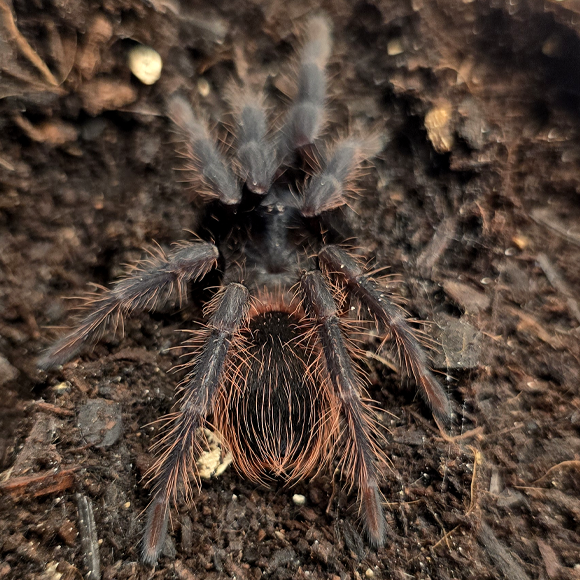
Adult Lasiocyano sazimai typically reach a diagonal leg span of around 12–14 cm, making them a medium-to-large tarantula—not a tiny blue bauble, but not a dinner plate either. Males tend to be a bit leggier but lighter and scrawnier than their female counterparts. Females grow stockier, with more bulk to their vibrant carapaces. Growth isn’t lightning quick, so patience pays off… but your blue beauty will become more striking after every moult.
Lifestyle
Despite their show-stopping blue colour, Lasiocyano sazimai are down-to-earth (quite literally)! They’re a primarily terrestrial species but often display fossorial (burrowing) tendencies, especially as youngsters. In captivity, they’ll readily burrow or snuggle under cork bark, webbing the area around their chosen hide. Older, confident specimens sometimes sit in the open to show off those blue legs, especially at night. Expect them to design their own bachelor pad with tunnels, web curtains, and the occasional decorative prey husk.
Lifespan
Females of this species are in it for the long haul, easily living 12 to 15 years or even longer with good care. Males, meanwhile, race through their lifecycle in three to five years before fading into legend (or the next generation, if you’re breeding). Captivity usually helps everyone live longer and in better condition—just keep husbandry spot-on, and you’ll have a long-term, glimmering roommate.
Growth Rate
Lasiocyano sazimai grows at a leisurely medium pace compared to some of the speedy New World species. Slings and juveniles tend to moult every few months, especially if temperatures and feeding are dialled in. Growth slows as they age, so don’t be alarmed when yearly moults become the norm for adults. Warmer temps and regular meals encourage faster growth, but don’t try to rush things—nobody likes a stressed-out spider.
Temperament
These dazzling blue beauties are famously shy and can be skittish. Given the choice between fight and flight, they’ll almost always bolt for their hide (faster than you can say ‘where’d it go?!’). Defensive displays are rare but possible if persistently annoyed. Sudden movements or invasions are likely to send them sprinting or, on occasion, flicking urticating hairs. Overall, they're more ‘reclusive artist’ than ‘public performer’ and make perfect pets to observe, rather than handle—which, let’s be honest, is best for all involved.
Temperature
Aim to keep your enclosure between 22–26°C, which nicely mirrors their native Brazilian climate. A comfortable room temperature usually does the trick for most UK hobbyists, but a low-wattage heat mat or a reptile heat panel can help steady the temperature during the colder months. Always heat the enclosure side or back—not underneath—to avoid accidental ‘baking’ if your spider decides to dig. Avoid dramatic swings and never let things drop below 18°C or creep above 28°C for extended periods. Remember: tarantulas prefer being a tad cool rather than too warm.
Humidity
Lasiocyano sazimai appreciate a moderate humidity of 65–75%, avoiding rainforest sogginess and tumbleweed dryness alike. Use a substrate that retains moisture—such as coco fibre or topsoil—dampened on one side. Let the top layer dry out between light waterings to discourage mould and unwelcome fungi armies. A good-sized water dish is a must (even if the spider thinks it’s a swimming pool), and cross-ventilation keeps the air fresh and prevents stagnant, musty conditions. If you see the spider burrowing deep, they may be seeking a more humid microclimate, so tweak accordingly.
Visibility
You won’t see Lasiocyano sazimai strutting about in broad daylight like a common garden spider. They spend a good chunk of their time hidden in burrows or behind web curtains, emerging more at night or after a satisfying dinner. As the spider matures and gets comfortable, expect more sightings—especially after dark, when you might catch your blue friend perusing the premises. Their stunning colour makes every glimpse worthwhile, so patience is definitely rewarded.
Webbing
Expect Lasiocyano sazimai to be creative with webbing! While not on the level of a ‘cotton wool’ Chilobrachys, these spiders use silk to reinforce burrow walls, cover entrances, and create handy trip lines for prey detection. Some individuals web heavily over their hide and the surrounding substrate, especially as slings or juveniles. Observing them engineer their own protective silk haven is half the fun—well, that, and seeing crumbs of blue poking out from a webby fortress.
Feeding
Start slings on pre-killed or small live prey—think fruit flies or pre-squished mini-crickets. As your spider grows, graduate to appropriately sized live crickets, roaches, or mealworms. Juveniles can handle larger meals (one or two prey items per week), and adults do just fine with a juicy cricket or roach every 10–14 days. Feeding response varies, but Lasiocyano sazimai are generally keen eaters—especially after a moult (after a safe hardening period). Avoid overfeeding—you want a healthy, not ballooning, abdomen. Remove uneaten prey within 24 hours, especially during premoult. Lastly, don’t be alarmed by fasting; like all good artists, they’re prone to mysterious whims, refusing meals for weeks before surprising you with a fresh moult and a renewed appetite.
Enclosure Recommendations
A medium terrestrial enclosure (think 30x30x30 cm or similar for adults) suits Lasiocyano sazimai perfectly. The enclosure should provide at least 10–15 cm of slightly moist substrate for burrowing—coco fibre, peat, or a safe mix is ideal. Include a sturdy, cork bark hide and scatter some leaf litter or moss for added security (and nice scenery). A good-sized water dish should be present at all times—don’t be surprised to find substrate or moults floating in it. Ensure plenty of cross ventilation to balance humidity and airflow, especially with a moisture-retentive substrate. Heavy or locked lids prevent escape attempts from unexpected climbs. Illumination isn’t required—your spider would rather avoid bright lights. Finally, avoid handling and only perform spot cleaning when your blue friend is safely tucked away in their hide.
Experience Level
This species is best suited for hobbyists with at least a bit of tarantula-keeping experience—let’s say intermediate. Newcomers could manage with care, but the spider’s speed, skittishness, and humidity requirements make it less forgiving than classic starter species. If you’ve kept sturdy terrestrials before, you’ll be set. If Lasiocyano sazimai is your absolute first, do your research and consider consulting a seasoned keeper.
Final Thoughts
The Lasiocyano sazimai offers a head-turning mix of manageable size, hypnotic blue colouration, and relatively straightforward husbandry for intermediate keepers. They’re perfect for those after something a little more exotic (and a lot more blue) than your average brown tarantula. The main challenges are their speed and ability to vanish into their own burrows at the first sign of disturbance—but who doesn’t love a bit of suspense in their invertebrate keeping? Their hardiness, inquisitive webbing, and occasional ‘grand reveal’ moments make them a unique centrepiece in any tarantula collection. Just remember: stick to observing, not handling, and you’ll be enchanted for years.
Community Species Gallery
Approved photos submitted by registered Spoodoire users.
No community images have been approved for this species yet.
Submit Your Photo
Log in to submit a photo for this species.
Available at The Spoodoire
Products linked to this species care guide.